
With AI and layoffs, the story we are used to seeing is that it always impacts tech roles.
Engineers, Developers, Product teams etc.
But…
Walmart has just changed the narrative. Because their latest round of layoffs are not about tech roles. They’re happening in operations and fulfilment, arguably the backbone of how the business runs.
Reports suggest Walmart has been restructuring parts of its workforce across operations, supply chain, and fulfilment as it continues investing heavily in automation, AI, and operational efficiency across the business.
It’s an interesting one because Walmart isn’t a tech company, it’s retail, which means this isn’t just about big global Silicon Valley anymore. This is about how every company and industry is starting to reorganise themselves and their workforce around AI.
What’s actually happening?
Walmart has been doubling down on automation across its operations, from their supply chain, to their customer experience. AI is being used to streamline decision making and reduce the need for manual coordination across all their teams.
We’re already seeing this play out physically. Walmart is closing fulfilment centres in locations like Illinois and Massachusetts, impacting around 200 employees, as operations shift into larger, highly automated “NextGen” facilities.
When this happens, jobs are not entirely replaced, but a lot of their layers are, which is where the impact hits the most. The roles that traditionally connect work, rather than produce it, are impacted.
This includes operational roles, fulfilment teams, and over time, coordination layers like middle management. That’s why these layoffs are feeling different, since it’s not removing their technical skill set. It’s about how work moves around the organisation.
What Walmart is showing us is that AI isn’t targeting job titles. It’s targeting inefficiencies in how work gets done.
The thing is, this is not the first time this has happened. We’ve seen this move before. Companies leaning heavily into automation. Klarna is a good example. They pushed hard into AI for customer service, reducing the need for human agents. But what we should have learnt from them is that over time, they realised that AI couldn’t fully replace the human nuance, especially in more complex or sensitive situations.
So they inevitably started bringing people back into the process. They had a different structure and different types of roles, but still they needed to bring people back into the fold. THIS is what companies should be doing before hitting the mass layoff button. Re-imagine the workforce, re-deploy, fix up the structure. We’re not saying things don’t need to change, we’re saying the opposite.
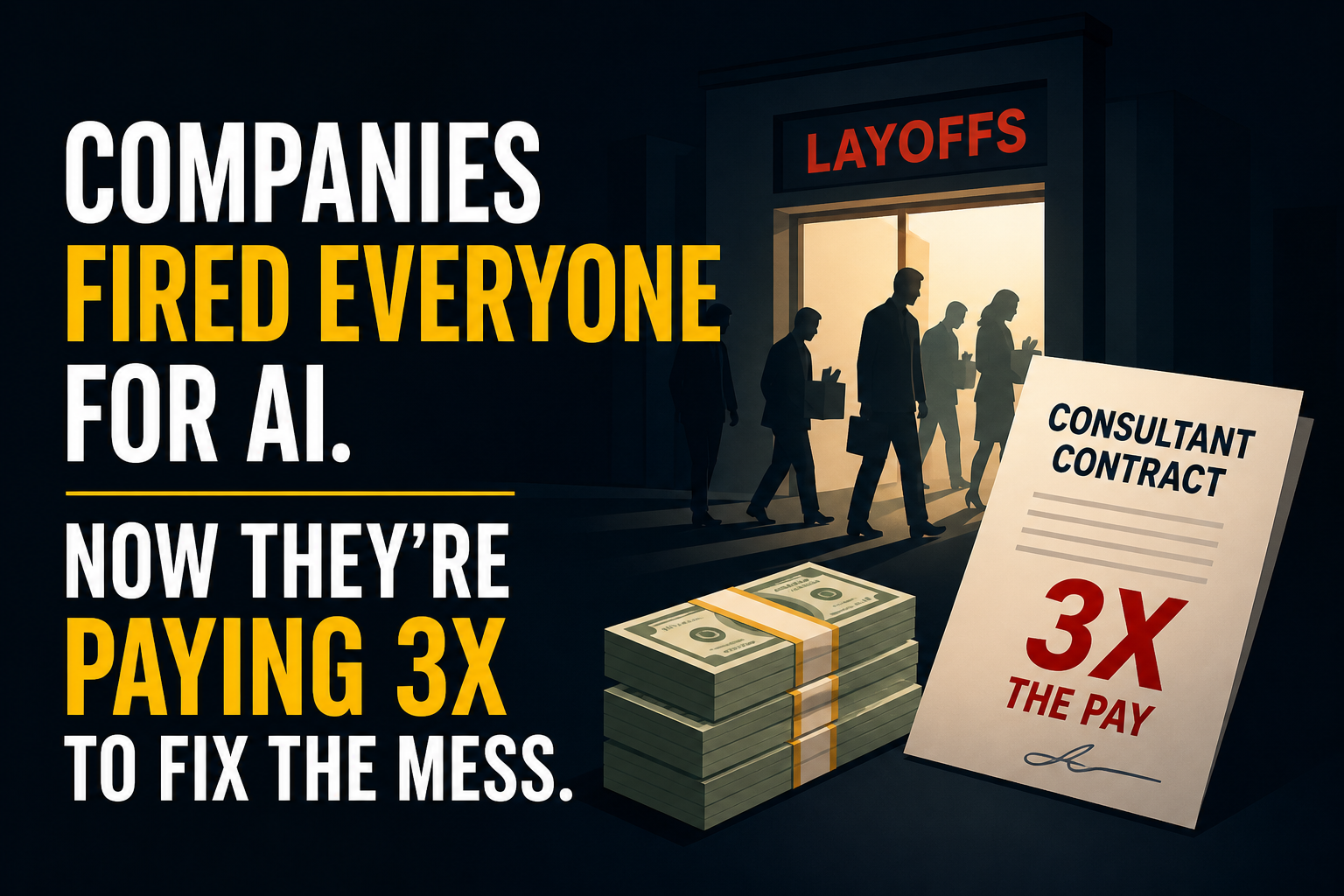
Because what we’re seeing across industries right now is companies redesigning systems, not just removing people. And when that’s done poorly, it creates gaps that businesses later have to fix.
Things MUST change, but it doesn’t mean cut people immediately. Yes, costs need to be managed. But how you do that matters. But we don’t want to see thousands gone one month, and then 75% of jobs back the next. It’s inefficient, expensive, and most important impacts people emotionally, physically, mentally. Which causes other challenges.
So where does that leave corporate professionals? This is the what people are trying to figure out.
Because if you’re not in a technical role, it’s easy to assume you’re safe from “AI layoffs”. But we have seen cases where all roles can be at risk. This isn’t about tech vs non-tech anymore. It’s about how your work fits into the system.
What we should all be doing to prepare ourselves for change and insure our career is:
- Start translating your work into outcomes
- Reduce your reliance on internal visibility
- Build a clear professional narrative
- Stay connected to opportunity
- Network and create community
- Understand how AI is impacting your specific function, not just your industry
Walmart’s story is one that we will start to hear more often. We all know AI will change our jobs, but we don’t know the extent of the impact just yet. What we DO know, is that it is definitely going to change the structure of our workforce, so we need to be prepared for impact.
What we’re seeing here isn’t just job loss. It’s job redesign. Walmart is still investing, still growing, still hiring, just in different roles, in different locations, and with different skill requirements.
Eventually, the workforce will find the right balance between AI and People, but for now, we are in the experimental phase where anything can happen. Some companies will get this balance right.
Others will move too fast, cut too deep, and have to rebuild; their workforce and their reputations.
Have a workplace or talent related question for the team at TheCareerGrid? We would LOVE to hear from you! Contact us at info@thecareergrid.com
Want to hear more from TheCareerGrid? Subscribe to our blog and follow us on LinkedIn!
Leave a Reply